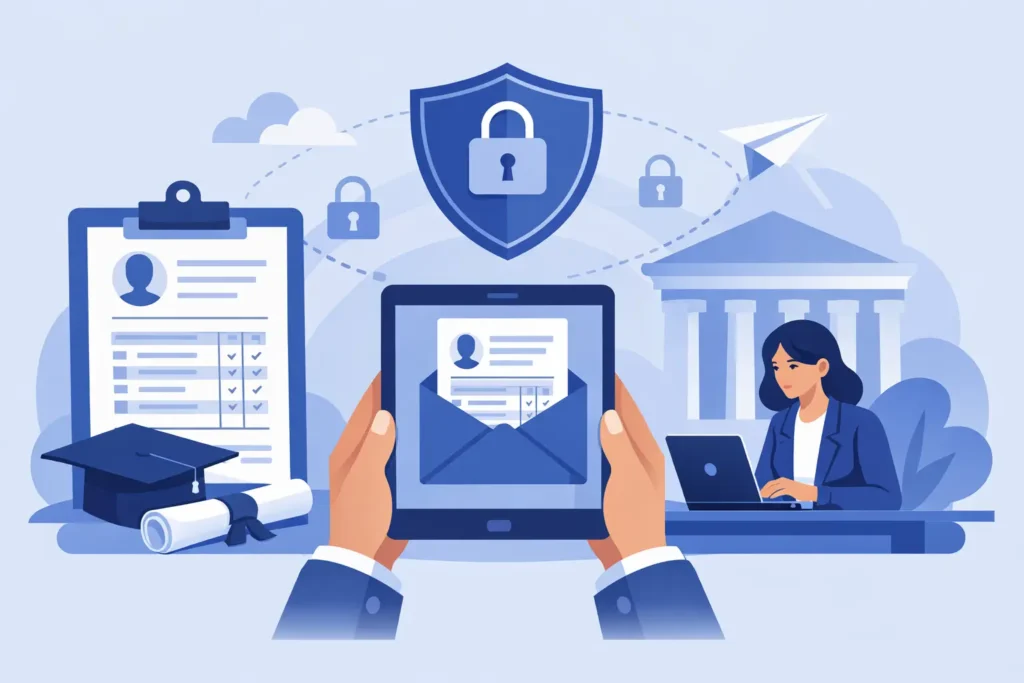
A missing transcript can stop a job application, professional registration, university admission or visa process without warning. When you need to request official academic transcript records, speed matters, but so does using the right source. An official transcript must come from the university or recognised awarding body that holds your student record – not a document broker, third party seller or unofficial download service.
This guide explains what makes a transcript official, how to order one correctly and how to prevent the common mistakes that lead to rejected documents.
What an official academic transcript actually proves
An academic transcript is the formal record of your studies. It usually lists your full name, programme title, dates of attendance, modules or subjects completed, marks or grades, credits achieved, classification or award result, and the date the qualification was awarded.
A degree certificate confirms that an award was granted. A transcript provides the detail behind that award. Employers, admissions teams, professional bodies and credential evaluators may ask for both, particularly when they need to confirm subject coverage, grades or course duration.
For a transcript to be accepted as official, it normally needs to be issued directly by the university registrar, student records office, examinations office or approved digital transcript provider. Depending on the institution, it may carry a stamp, authorised signature, secure digital certificate, unique reference number or verification code.
Do not assume that a scanned copy of an old transcript is official simply because it looks genuine. It may be useful for an initial application, but many organisations require a sealed paper copy or an electronic transcript delivered directly from the institution.
Request official academic transcript records from the right office
Start with the university where you completed the course. Search for its registrar, alumni services, student records or transcript request process. If your university has merged, closed or changed its name, the records may have transferred to a successor institution, national archive or relevant education authority.
Use the official contact route displayed by the awarding institution. This protects your personal data and helps ensure the document can be verified later. Be cautious with websites that promise a transcript in a few days without confirming your enrolment, identity or authorisation. A legitimate issuer must locate your actual academic record before producing anything.
Most institutions will ask for your previous name, date of birth, student or registration number if known, course title, graduation year and a copy of identification. If your name has changed through marriage, civil partnership or another legal process, provide the supporting document requested by the university. A mismatch between the name on your application and the name on the transcript is a frequent cause of delay.
If someone else is making the request for you, the university may require written consent and proof of identity. This is normal. Academic records are personal data and must be handled carefully.
Choose the correct transcript format
Before paying a fee, ask the receiving organisation exactly what it needs. There are usually three possibilities: a secure electronic transcript sent directly to the recipient, a hard-copy transcript in a sealed envelope, or a certified copy for your own records.
Electronic delivery is often fastest and reduces the risk of postal loss. It is especially useful where an employer, university or evaluator can accept digital records from the issuing institution. However, some authorities still require a sealed paper transcript, sometimes with the seal or stamp crossing the envelope flap. If that is the rule, do not open the envelope. Once opened, it may no longer be accepted as official.
Order enough copies if you are applying to several places, but do not over-order sealed copies before confirming each recipient’s policy. Some institutions now prefer direct digital transmission and may reject a paper document, even if sealed.
Avoid the mistakes that delay verification
The fastest route is not always express delivery. The real delay often happens before dispatch, when the university cannot identify the correct record or the request lacks essential information.
Check every detail before submitting the form. Use the name you studied under, not only your current name. Give the correct campus, faculty or college where relevant. Include the qualification level precisely, such as BA, BSc, MSc, MBA, PhD or postgraduate diploma. A transcript request for the wrong programme can create avoidable confusion, especially where you completed more than one award at the same university.
Be equally careful with recipient details. A transcript addressed to a general admissions inbox may sit unread, while a document sent to the specified verification address can be processed promptly. If an employer uses a background-check provider, ask whether the provider needs to contact the university itself or whether it accepts a transcript supplied by you.
It is also wise to keep your order confirmation, payment receipt, tracking details and any correspondence with the records office. These do not replace the transcript, but they give you a clear audit trail if you need to chase an urgent request.
Be realistic about timing and fees
Transcript turnaround varies widely. A recent graduate with a digital student record may receive a secure electronic document quickly. Older records, archived files, overseas delivery, name changes and peak graduation periods can take longer.
Urgent processing may be available, but it depends on the university’s capacity and policy. No legitimate provider should guarantee an official transcript before the issuing institution has confirmed your record. If a deadline is close, submit the request straight away, inform the recipient that the official record has been ordered and ask whether they will accept provisional evidence while it is being processed.
Fees are also normal. Universities may charge for administrative retrieval, certified copies, secure digital dispatch, courier delivery or international postage. Read the fee schedule before placing the order so you understand whether the charge covers one copy, multiple copies or delivery to a particular recipient.
Protect yourself from unofficial transcript services
A convincing-looking document is not the same as a verifiable academic record. Employers and institutions increasingly check qualifications through direct contact with the awarding body, trusted verification channels or recognised credential evaluation processes. A document that cannot be confirmed against university records can lead to rejection, withdrawn offers and serious questions about your application.
Stay with the official issuer. Do not send passport details, certificates or payment information to a service that cannot clearly explain its relationship with your university. Never alter grades, dates, course titles or personal details on an existing transcript. Even a small change can invalidate the document and create a lasting problem.
If your original transcript is lost or damaged, ask the university for a replacement or reissue. This is the proper route. The university can issue a current official record, confirm whether historic formats are still available and advise how the replacement can be verified.
When your university no longer exists
A closed institution does not necessarily mean your academic record has disappeared. Start by identifying who inherited its records. This could be a merged university, a government education department, an awarding organisation or an archive service.
Provide as much information as possible, including the institution’s name at the time you studied, campus location, approximate dates, programme name and any student reference number. Archived requests often take longer, so allow extra time and avoid paying anyone who claims they can recreate records without access to the official archive.
A practical check before you submit
Before you finalise your request, confirm four things: the transcript is being ordered from the legitimate record holder; the name and course details match your study history; the format meets the recipient’s rules; and the delivery address is correct. These checks take minutes and can save weeks of back-and-forth.
For international use, ask whether the recipient requires a translation, certified copy, sealed envelope, direct electronic transmission or additional verification. Requirements differ between employers, universities, immigration processes and professional regulators. There is no single format that works everywhere.
Keep the request simple and official
Your academic history is valuable, and the safest way to present it is through records that the awarding institution can stand behind. Contact the official university records office early, give complete information and choose the delivery method your recipient actually accepts. A properly issued transcript may take a little administration, but it gives you something far more useful than a quick-looking document: evidence that can be checked with confidence when your next opportunity depends on it.