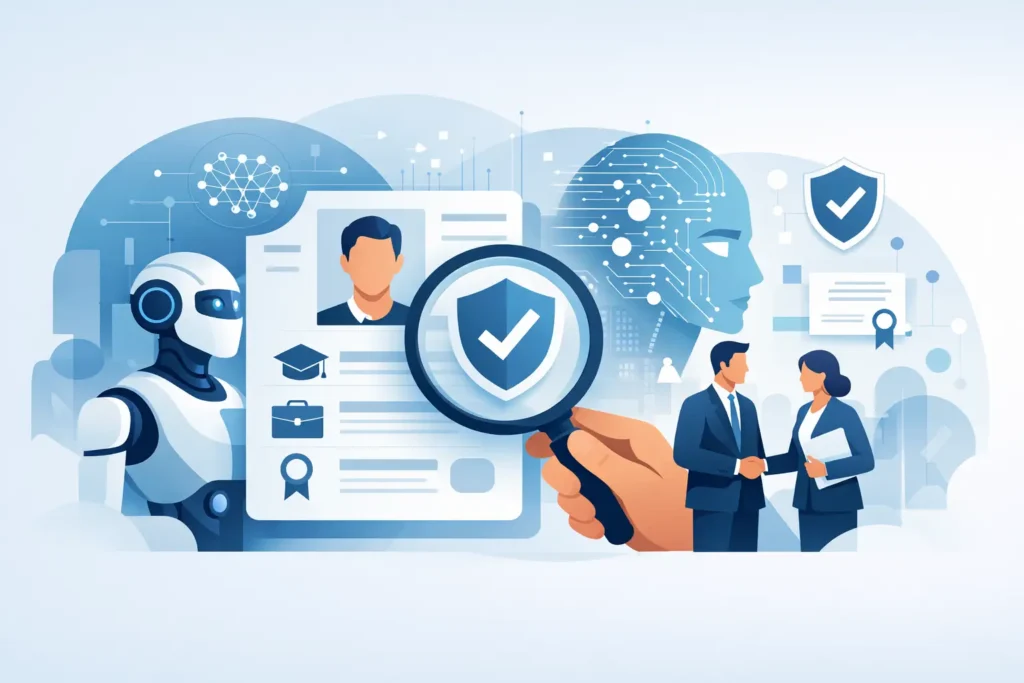
A qualification can open a door to a new role, promotion, professional registration or further study. But when an employer cannot quickly confirm the award, a strong application can stall. AI credential verification is changing that process by helping organisations identify genuine academic records, spot inconsistencies and request confirmation from the right source without relying on guesswork.
For candidates, this should mean faster and fairer checks. For employers, it means less exposure to altered certificates, invented institutions and misleading claims. The key point is simple: AI can assist a verification decision, but a recognised awarding institution or authorised registry remains the source that confirms whether a qualification is valid.
What AI Credential Verification Actually Does
AI credential verification uses machine learning, document analysis and data-matching tools to review academic documents and the details provided by an applicant. It can compare names, dates, course titles, award classifications, document layouts and security features against known patterns. It may also flag missing information, unusual fonts, copied signatures or inconsistencies between a CV and a transcript.
This is useful because recruitment teams often handle large volumes of applications. A manual review of every certificate can take time, particularly where candidates studied overseas or graduated many years ago. AI can prioritise records that need closer attention, helping a verifier focus on the cases where evidence is incomplete or unusual.
It does not, however, turn a scan of a certificate into proof. A convincing document can still contain incorrect information. Likewise, a genuine graduate may have an older certificate format, a changed surname or a damaged original. That is why the strongest process combines technology with direct confirmation from the university, college, professional body or approved verification service.
Why a QR Code Is Not Enough
QR codes, serial numbers and digital seals can make a document easier to check, but they are not automatic guarantees. A QR code may lead to an outdated page, a copied record or a website that has no connection to the institution named on the certificate. A serial number only has value when it can be confirmed through the issuer’s own records.
AI can assess whether a code, seal or layout appears consistent with a genuine document. It can also identify whether an image has been edited or whether details appear to have been pasted into a template. Yet the final question remains the same: does the awarding body confirm that this person received this qualification on this date?
Candidates should therefore keep their details consistent across their CV, application form, transcript and identification. If a name has changed due to marriage, civil partnership or another personal reason, provide the supporting evidence requested by the employer. Clear records reduce delays and avoid an avoidable mismatch being mistaken for a problem.
What Employers Should Check Before Making a Decision
A fair verification process should assess the qualification, not make assumptions about the person. Employers should establish what is genuinely required for the role before collecting documents. Some positions require a specific accredited award or professional registration. Others only need evidence of relevant learning, experience or skills.
Where an academic check is necessary, the employer should confirm the awarding institution, the qualification title, the date of award, the mode of study where relevant, and whether the institution was recognised at the time. For overseas awards, this may involve a recognised credential evaluation service or direct contact with the institution.
AI is particularly helpful at the first stage, where it can identify missing fields and document anomalies at scale. The next stage should be handled by a trained person who understands context. A candidate should have a reasonable chance to explain discrepancies before an employer reaches a negative decision.
This matters because automation can make mistakes. Transliteration differences, international date formats, disability-related barriers, historic university mergers and records held under a former name can all create false alerts. A system that simply rejects anything unusual is not secure. It is careless.
Privacy and Consent Must Come First
Academic records contain personal information, and sometimes more information than an employer needs. A transcript can reveal subjects, grades, dates and identifying details that are irrelevant to a particular vacancy. Organisations using AI credential verification should collect only what is necessary, tell applicants why the information is needed and keep it for no longer than required.
For UK recruitment, this means working in line with UK data protection law. Candidates should understand who will review their documents, whether an external verification provider is involved and how they can challenge an inaccurate result. Employers should also ensure that any AI tool has appropriate security controls and a clear process for human review.
Speed should never come at the expense of privacy. A rushed check carried out through unverified email addresses, informal messaging apps or public document-upload sites can put a candidate at risk of identity fraud. Legitimate checks use clear channels, documented consent and traceable communication.
Replacing a Lost Certificate the Right Way
Lost, damaged or stolen certificates are common. Moving house, water damage, theft and the passage of time can all leave a graduate without the document they need. In this situation, the safest route is to contact the original university or awarding organisation and ask about its replacement certificate, transcript or confirmation-letter process.
A legitimate replacement normally reflects the original award and is issued or confirmed by the body that awarded it. The institution may ask for identification, prior student details, a declaration about the missing document and an administration fee. Turnaround times vary, especially for archived records, but the result is evidence that can be verified through the proper channel.
Be cautious of any service that promises a new degree from an institution where you did not study, claims it can add academic results without an award record, or suggests that a certificate alone will pass every background check. Employers increasingly verify beyond the paper document. They may contact the institution, check official databases where available or request confirmation through an authorised provider.
A Better Experience for Genuine Candidates
Used properly, AI can remove friction from credential checks. It can help employers identify the correct institution, recognise standard document formats, reduce repetitive follow-up questions and move genuine applicants through the process more quickly. That benefits people changing careers, returning to work, applying internationally or replacing missing academic papers.
The best outcome is not a system that treats every applicant with suspicion. It is a process that is quick, accurate and transparent. Candidates should receive clear instructions. Employers should use proportionate checks. And where a document cannot be confirmed immediately, both sides should have a practical route to obtain official evidence.
A genuine qualification deserves a verification process that is just as credible as the work that earned it. Keep your records accurate, request replacements only from authorised issuers and expect any serious employer to use technology with judgement, privacy and fairness.
Pingback: Degree Verification Services: What Employers Check – Buy a Degree Onlineg